Steel? Yes, Steel.
L
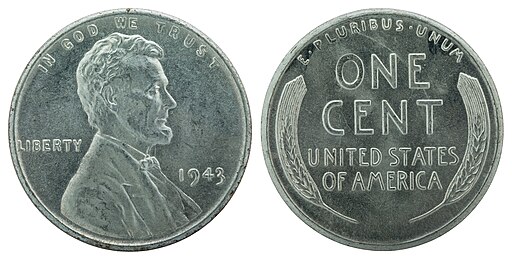
If you’ve ever dug through an old jar of change or flipped through a dusty coin album, chances are you’ve heard whispers about the 1943 steel wheat cent. It’s one of those coins that instantly sparks curiosity, and for good reason. It looks nothing like a normal penny, has a wartime story behind it, and has fooled more than a few people into thinking they struck treasure.
As a collector, this is one of those pieces that’s just plain fun to talk about.
A penny that isn’t copper
The first thing you notice about a 1943 steel cent is that it’s silver-gray, not copper. That alone makes it stand out. During World War II, copper was needed for ammunition and military equipment, so the U.S. Mint made a temporary switch. In 1943, pennies were struck on zinc-coated steel instead of copper.
The result? A penny that looks more like a dime.
It still carries the familiar Lincoln portrait on the front and the classic wheat ears on the back, but the color throws people off. Many folks assume it’s a foreign coin, a token, or even a fake. In reality, it’s one of the most historically interesting U.S. coins ever made.
A true wartime coin
The 1943 steel cent is a real product of the home-front war effort. When you hold one, you’re holding a piece of American history from a time when every resource mattered.
Over a billion were made across three mints:
-
Philadelphia (no mint mark)
-
Denver (D)
-
San Francisco (S)
So while they’re not rare in a technical sense, they’re incredibly popular because of their backstory. They represent a year when even pocket change had to support the war.

Why people get excited about them
Almost every collector remembers the first time they saw one.
It doesn’t look real. It sticks to a magnet. It feels different in your hand. And it makes you wonder, “How did this even happen?”
That curiosity is exactly why steel cents remain popular today. They’re one of the easiest “special” coins for beginners to own, and they’re a great gateway into collecting.
You don’t need to spend a fortune to get one either. A typical circulated example might cost only a few dollars, while cleaner, uncirculated pieces can run higher depending on condition.
The rust problem
Steel cents have one big weakness: they rust.
If the zinc coating gets scratched or worn through, moisture reaches the steel underneath and corrosion begins. That’s why many surviving examples show dark spots or rough patches.
Collectors always look for:
-
Original zinc coating
-
No bubbling or pitting
-
Clean, bright surfaces
A shiny steel cent with no rust is far more desirable than one that’s been eaten away over the decades.

The famous copper mistake
This is where legends are born.
A few copper planchets from 1942 accidentally got mixed into the presses in 1943. The result was a tiny number of 1943 copper pennies, and those are among the most valuable U.S. coins ever made. Authentic examples have sold for hundreds of thousands of dollars.
That’s why people still test their steel cents with magnets, hoping maybe, just maybe, they’ve found a copper one instead.
If your 1943 penny is copper-colored and doesn’t stick to a magnet, that’s when it’s time to get very serious about authentication.
A must-have for any wheat cent set
If you collect Lincoln wheat cents, the 1943 steel issue is a mandatory slot. It marks a unique one-year type that will never be repeated. No other U.S. coinage looks like it.
It’s a reminder that even something as small as a penny can tell a powerful story about the country, the economy, and the times people lived through.
Final collector thought
The 1943 steel wheat cent may not be rare, but it’s special. It’s the kind of coin that makes people stop and ask questions. It connects everyday pocket change to world history. And it proves that sometimes the most interesting coins aren’t gold or silver — they’re the oddballs.
If you don’t already have one, it’s a great addition to any collection. And if you do, you already know — it’s one of those coins you never forget finding.
ule Content settings. You can also style every aspect of this content in the module Design settings and even apply custom CSS to this text in the module Advanced settings.